
 Chamber Business News
Manufacturers are growing more optimistic about sales and production over the coming year, but rising input costs, transportation expenses and continued global uncertainty are keeping pressure on the sector, according to a new survey from the National Association of Manufacturers.
NAM’s Q3 2026 Manufacturers’ Outlook Survey found that manufacturers expect raw material and other input costs to increase 5% over the next 12 months. Increased raw material costs ranked as manufacturers’ top business challenge for the second consecutive quarter, followed by rising health care costs and trade uncertainty.
The results illustrate a manufacturing economy in which stronger expectations for demand are colliding with persistent cost pressures.
“Arizona manufacturers are ready to grow, invest and compete, but the cost of doing business remains a significant challenge,” Arizona Manufacturers Council Executive Director Grace Appelbe said. “Whether it’s raw materials, energy, transportation or health care, rising costs ultimately affect manufacturers’ ability to invest in their operations and their workforce. And the uncertainty surrounding tariffs isn’t helping. Tariffs are import taxes, and manufacturers pay them when they source key inputs from abroad, putting additional pressure on costs that can ultimately be passed along to consumers. The encouraging news is that manufacturers remain optimistic about what lies ahead, and policymakers can help sustain that momentum by advancing policies that provide greater certainty and keep Arizona and the United States competitive.”
That optimism is reflected in manufacturers’ expectations for the coming year. Survey respondents projected sales, production, capital investment and exports to grow at their fastest rates in more than four years.
Manufacturers expect sales to increase 4.3% over the next 12 months and production to rise 3.8%, the highest projected growth rates for both measures since the second quarter of 2022.
“Strong demand is fueling a notable increase in anticipated sales and production growth, both projected to rise 4.3% and 3.8%, respectively, the highest growth rates for both indexes since Q2 2022,” NAM Chief Economist Victoria Bloom said. “Because of a strengthening sales forecast, manufacturers remain optimistic, though growth in the industry would likely be stronger if cost pressures eased.”
Global disruptions continue to complicate that outlook.
Among manufacturers surveyed about the conflict in the Middle East, 60.6% said conditions related to the conflict had not improved from the previous quarter, while 33.2% said challenges had worsened.
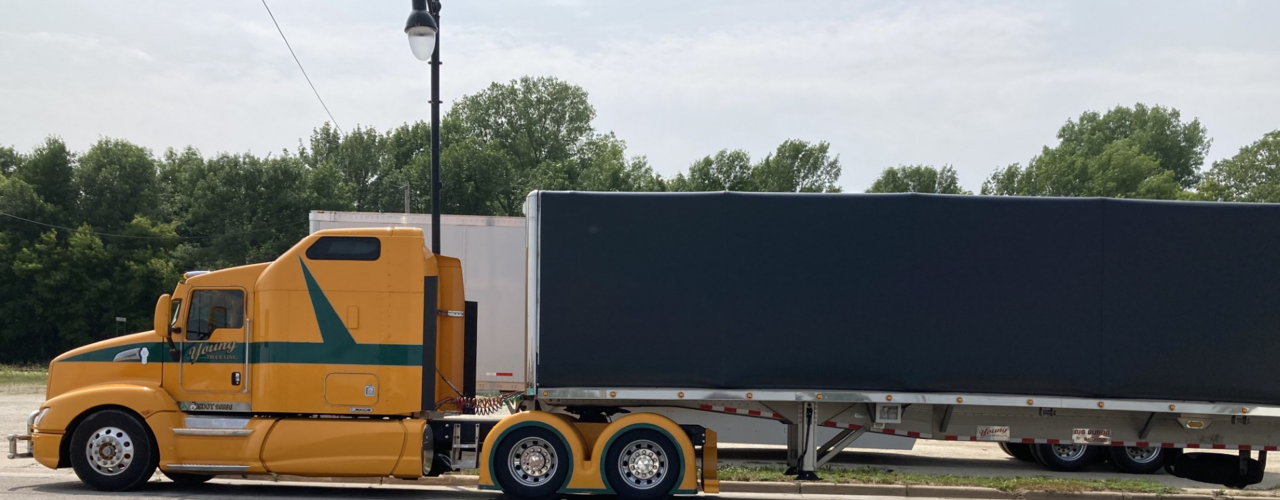
Transportation expenses are adding to those pressures. More than three-quarters of manufacturers, 77.3%, identified freight rates as a challenge, while 74.1% cited fuel costs. Trucks are especially important to the sector, with 98.6% of respondents reporting that they rely on trucking to move goods.
Manufacturers also appear prepared to make significant investments in their operations.
Nearly two-thirds of respondents, 63%, said they plan to import industrial machinery, parts or components during the next year to support existing or planned manufacturing operations. Among those companies, 69.2% expect to use the equipment to upgrade or replace existing machinery, while 63.6% said the machinery would support new or expanded operations.
NAM said the findings demonstrate the importance of policies that allow manufacturers to secure the equipment needed to expand and modernize their facilities. The organization is advocating for a U.S. Manufacturing Investment Accelerator Program designed to improve manufacturers’ access to industrial machinery.
“Manufacturers are seeing encouraging signs for growth, but they are also facing some strong headwinds such as rising costs and global uncertainty that continue to place pressure on global supply chains,” NAM President and CEO Jay Timmons said.
Timmons called for action on several priorities important to manufacturers, including surface transportation reauthorization, permitting reform, health care costs and greater trade certainty.
The quarterly results come as Arizona continues to expand its advanced manufacturing footprint, with semiconductor, aerospace and defense, electronics and other manufacturers playing an increasingly prominent role in the state’s economy.
NAM conducted its Q3 Manufacturers’ Outlook Survey from Aug. 11 through Aug. 27.
Photo: Pete unseth, CC BY-SA 4.0, via Wikimedia Commons







Add comment